
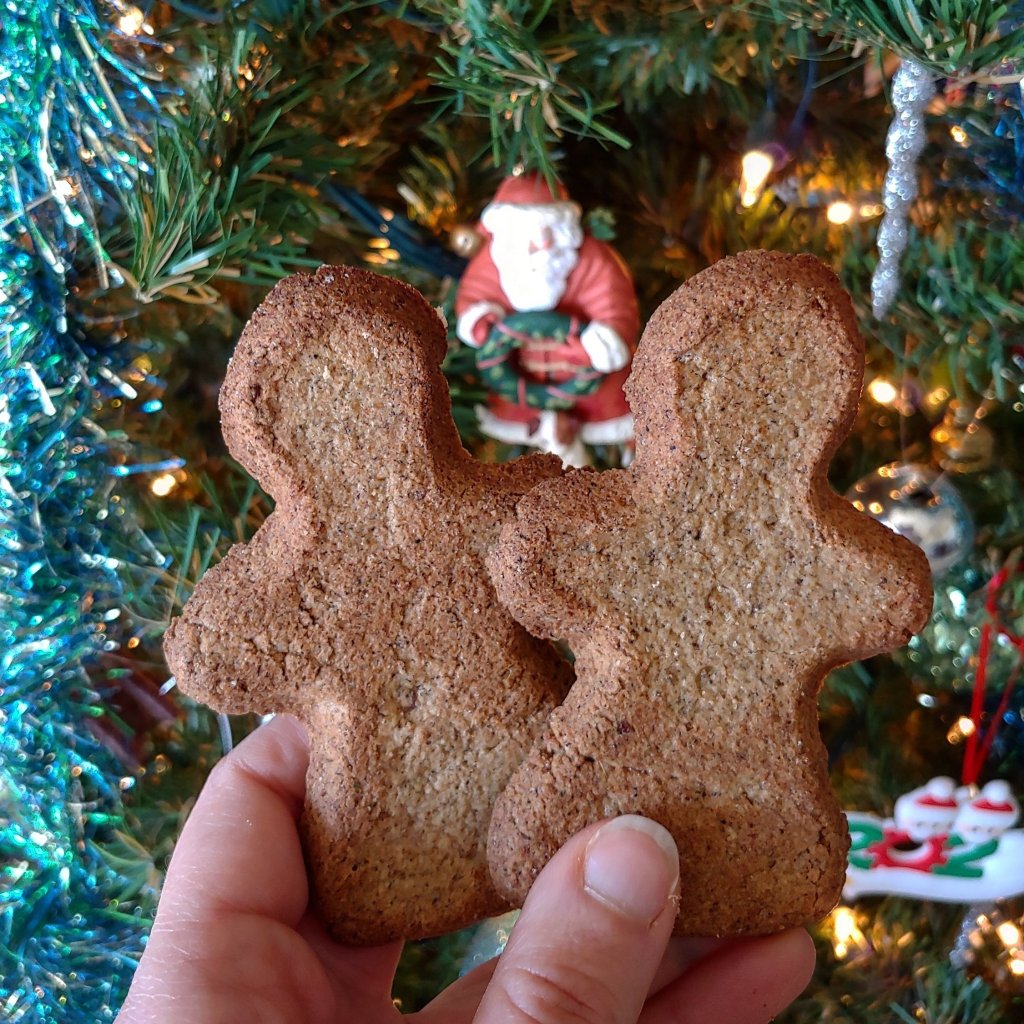
Gingerbread cookies are a timeless Christmas classic, with motifs popping up in festive music, movies, and activities. There is even a national gingerbread house competition in America (find details here), in addition to a plethora of exhibits and local competitions. It truly is amazing how a cookie became a symbol of Christmas, parallel to Saint Nick himself. Which got me thinking about the history of gingerbread and how we all came to love it so much.
Ginger as we know it is the rhizome or root of the ginger plant (Zingiber officinale). It is believed that the species originated from South Asia and spread from there via trade routes to the Middle East and Europe in the first century or even earlier[1-3]. From there it was disseminated to the western hemisphere during colonialization [4]. Ginger is commonly revered in herbalism practices as a strong digestive aid and is referenced in traditional medicine practices including Ayurveda and Iranian Tradition Medicine [1,3] (disclaimer: I am not an herbalist, consult one before use of herbal medcines!!!!). The root is also the center of cuisine across it’s growing regions including the Mediterranean, India, South Asia and North Africa. The plant itself is also fascinating, as it reproduces not by flowers but through the rhizome which we eat!
Honestly, some of my favorite things are ginger based from crystalized ginger, to dansak curry, to gingerbreads! It is a plant that I treasure and will eventually try to propagate from bits of grocery store ginger (find out how here). But enough of me geeking out about plants, lets talk about cookies!
It is thought that gingerbread either originated in Greece in 2400 BC or was brought into Europe by an Armenian monk in the 9th century (AD) [5-8]. Regardless, the version of gingerbread consumed back then was drastically different than what we know and love today. According to Barbara Rolek’s A history of gingerbread the first gingerbread was made with a base of almond meal and breadcrumbs, which I imagine resulted in something reminiscent of a graham cracker with earlier forms possible near the plants origin [5,8]. Since then, gingerbread has taken many forms depending on where you are ranging from fluffy cakes to crispy cookies, with everything from the standard molasses to chocolate as add ins!
Across the following centuries, these delightful holiday snacks became very popular across Europe, so much so it is claimed that Queen Elizabeth I of England once had gingerbread cookies fashioned in the likeness of her guests [5,8]. The gingerbread house, however, didn’t become a prominent motif until the Brothers Grimm documented the fairytale of Hansel and Gretel [5-8]. Originally, gingerbread was a year round treat and it is unclear from my research when it became synonymous with Christmas!
Gingerbread is still very popular today, with many central European nations laying claim to some of the best gingerbread around[8]. I have personally visited a gingerbread shop in Prague and the place was booming, even in the middle of July! There is also an official gingerbread museum in Prague where you can see historical gingerbread artifacts (check it out here). Grasmere gingerbread is also quite popular in the lake district in the UK, where they serve a more cake like version. Gluten free gingerbread, however, can be very difficult to come by. When I visited the shop in Prague, I only lucked out with some non-gingery treats and some no bake gingerbread bites. Both, of course, were delicious but not quite the same.
With that in mind, most of us gluten intolerant folks find ourselves making our own gingerbread at the holidays. This year was quite a unique one, though, and it felt over the top to make two dozen gingerbread cookies for two humans! So I decided to craft my own small batch gingerbread cookies to have for years to come!
The recipe yields about 10 cookies that are the texture of soft American ginger bread and the flavor of gingery graham crackers. I used buckwheat flour to change up the texture a bit and I really enjoyed the way it pared with the molasses! I haven’t tested this recipe out for houses so if you do, let me know how it goes. For mine I used fun little molds but cookie cutters also works!


Ingredients:
- 2 tsp. ground flax
- 6 tsp. warm water
- 1/4 cup vegan butter – room temp
- 2 tbsp. white sugar
- 2 tbsp. brown sugar
- 1/2 tsp. fresh ginger
- 1/4 tsp. cinnamon
- 1/4 tsp. nutmeg
- 1 tbsp. molasses
- 3/4 cup buckwheat flour
- 1/4 cup cornstarch
- 1/2 tsp. baking powder
- powdered sugar for rolling (if not using molds)
Instructions
- Combine flaxseed and water and set aside to gel
- Cream together sugars and butter until smooth and even through out
- Stir in the gelled flax mixture, spices, and molasses – stirring until completely combined
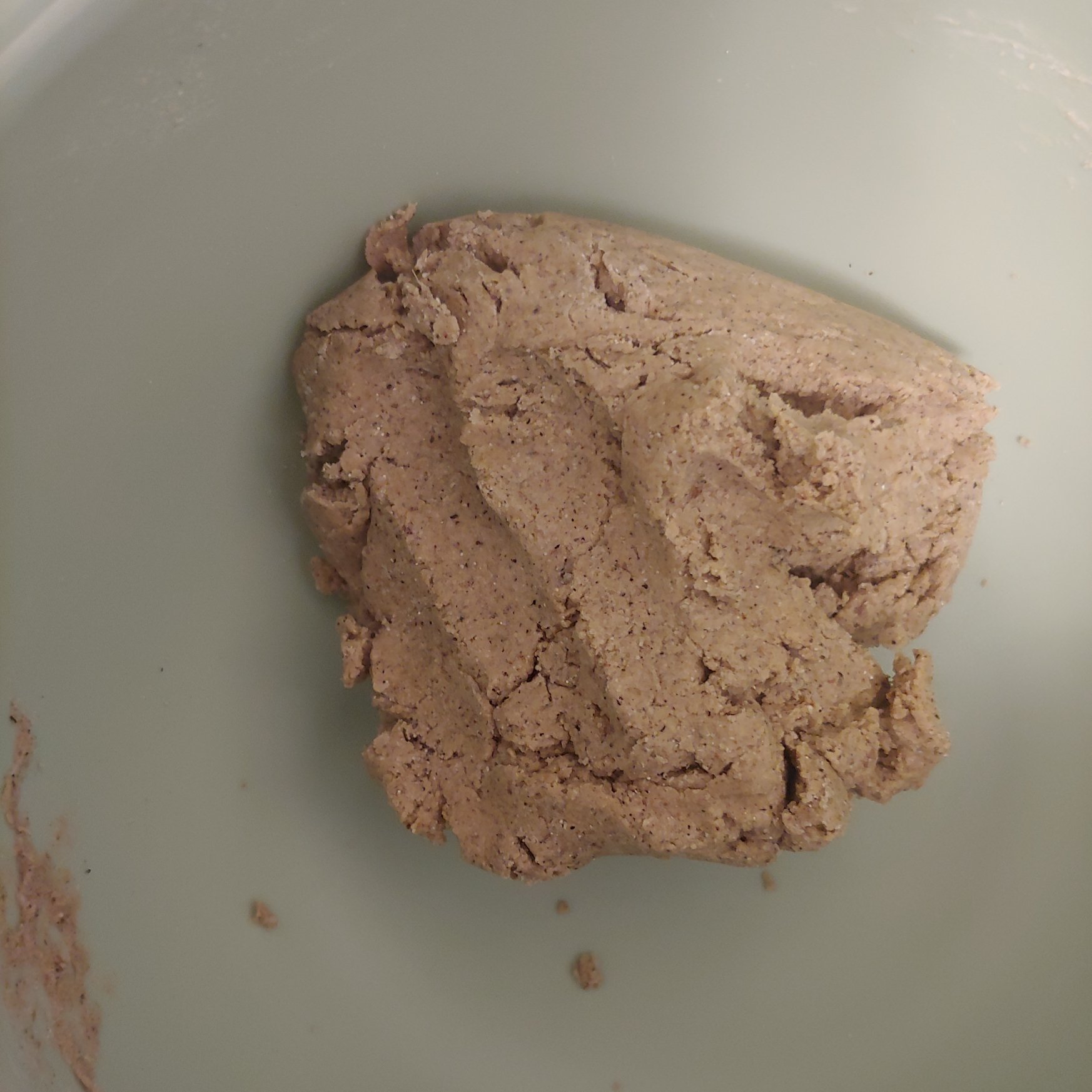
- Combine buckwheat flour, corn starch, and baking powder and fold in to the wet ingredients – the dough should be very thick and almost crumbly
- Place the dough in the fridge to chill for at least 30 minutes, or overnight
- Before you are ready to bake, preheat the oven to 375 F
- Remove the dough from the fridge and grease molds or a cookie sheet – I used some old molds from my grandma!
- If you are using molds simply press dough into the shapes until they are full and even. If you choose to use cookie cutters: sprinkle the counter tops with powdered sugar and roll our dough until 1/4 inch thick, use your favorite cookie cutters to make fun shapes.
- Place pan(s) in the oven and bake for 9 – 12 minutes, or until they begin to brown at the edges. All ovens are different
- Remove and allow to cool! You can top them with some fun royal icing decorations, eat them with a cup of hot chocolate, or simply enjoy them plan! They are sure to satisfy all the same.
Enjoy!
Sources:
1. Kizhakkayil, J., & Sasikumar, B. (2011). Diversity, characterization and utilization of ginger: A review. Plant Genetic Resources,9(3), 464-477. COPY THE CITATION TO CLIPBOARD
2. Ginger. (n.d.). Retrieved December 30, 2020, from https://unitproj.library.ucla.edu/biomed/spice/index.cfm?displayID=15
3. Khodaie, L., & Sadeghpoor, O. (2015). Ginger from ancient times to the new outlook. Jundishapur Journal of Natural Pharmaceutical Products,10(1), E18402. COPY THE CITATION TO CLIPBOARD
4. The Editors of Encyclopaedia Britannica. (2020) Ginger. Encyclopædia Britannica Retrieved December 30,2020 from https://www.britannica.com/plant/ginger
5. Avey, T. (2013, December 20). The History of Gingerbread. Retrieved December 30, 2020, from https://www.pbs.org/food/the-history-kitchen/history-gingerbread/
6. Antonia Wilson. (2018). A brief history of the gingerbread house; The witch’s house in the two-centuries-old tale of Hansel and Gretel is today inspiring ever more extravagant gingerbread creations and constructions across Europe and the US. The Guardian (London, England), p. The Guardian (London, England), Dec 22, 2018.
7. Knezevic, P. (2010). You’ve come a long way, gingerbread. Creative Loafing, p. 21. COPY THE CITATION TO CLIPBOARD
8. Rolek, B. (2019, October 11). How Gingerbread Became a Beloved Holiday Symbol. Retrieved December 30, 2020, from https://www.thespruceeats.com/the-history-of-gingerbread-1135954
 Green and Gluten Free